

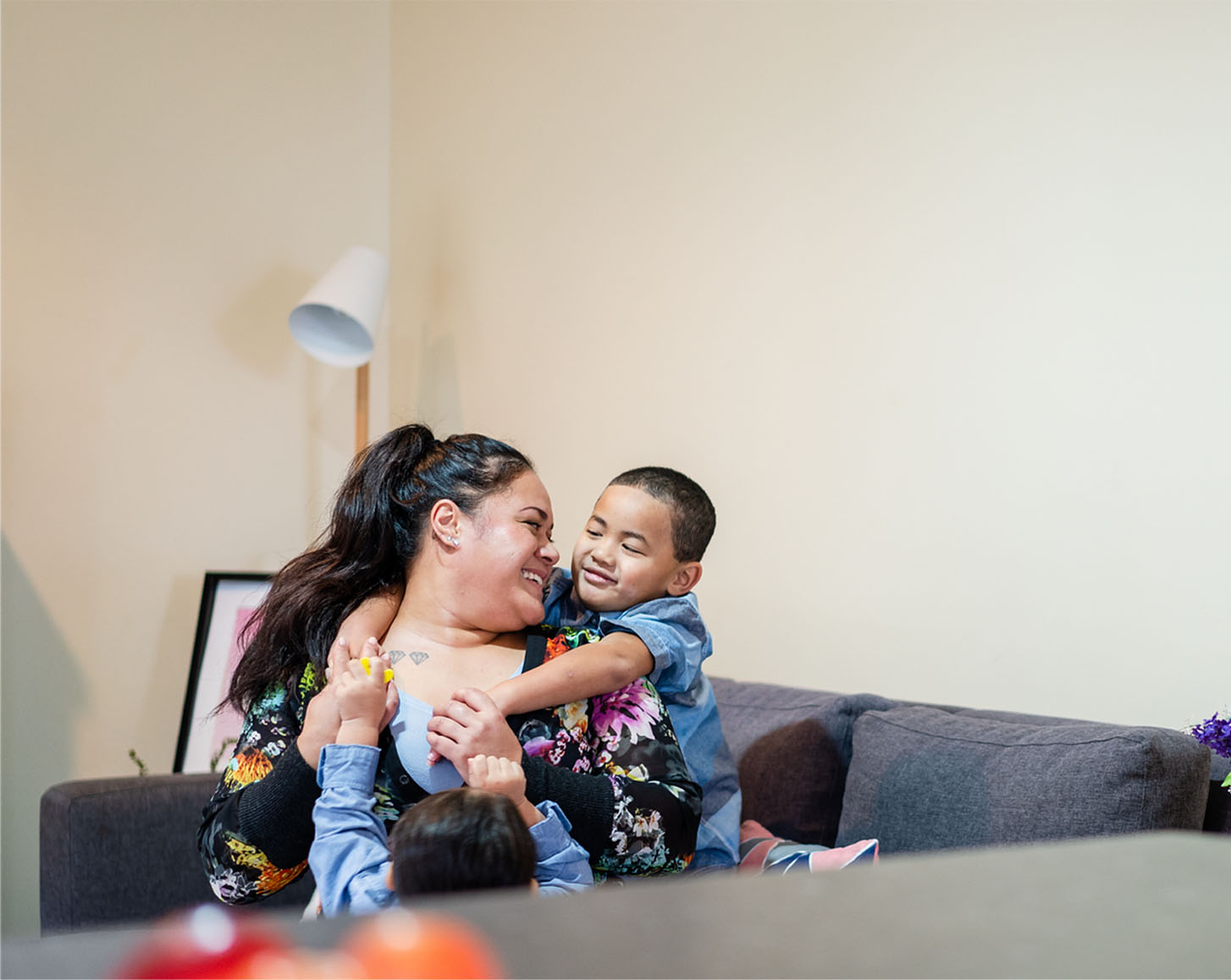
Hamilton-based charitable trust K’aute Pasifika provides health, education, employment, and social services to Pasifika communities and all other ethnicities who wish to benefit from equitable and holistic health and wellbeing.
Warm, dry, and energy-efficient homes are the launchpad for positive social, educational and employment outcomes. Homes that are properly insulated, heated, and ventilated can boost school attendance rates, reduce the likelihood of health issues like asthma, rheumatic fever, and bronchitis, and lessen the impact of rising energy bills, especially in winter.
We know that Māori, Pasifika, children, senior or disabled adults are more susceptible to poor housing conditions and are at higher risk of poor health outcomes. That’s why one of the projects K’aute Pasifika focuses on is tackling energy hardship in the Waikato region.
It’s indisputable that healthy homes matter and the impacts of poor indoor air quality are far-reaching. But without real-time, reliable data and the right tools to measure trends, it’s hard to know where best to invest efforts and resources.
K’aute Pasifika partners with AirSuite for data-led insights that make a difference
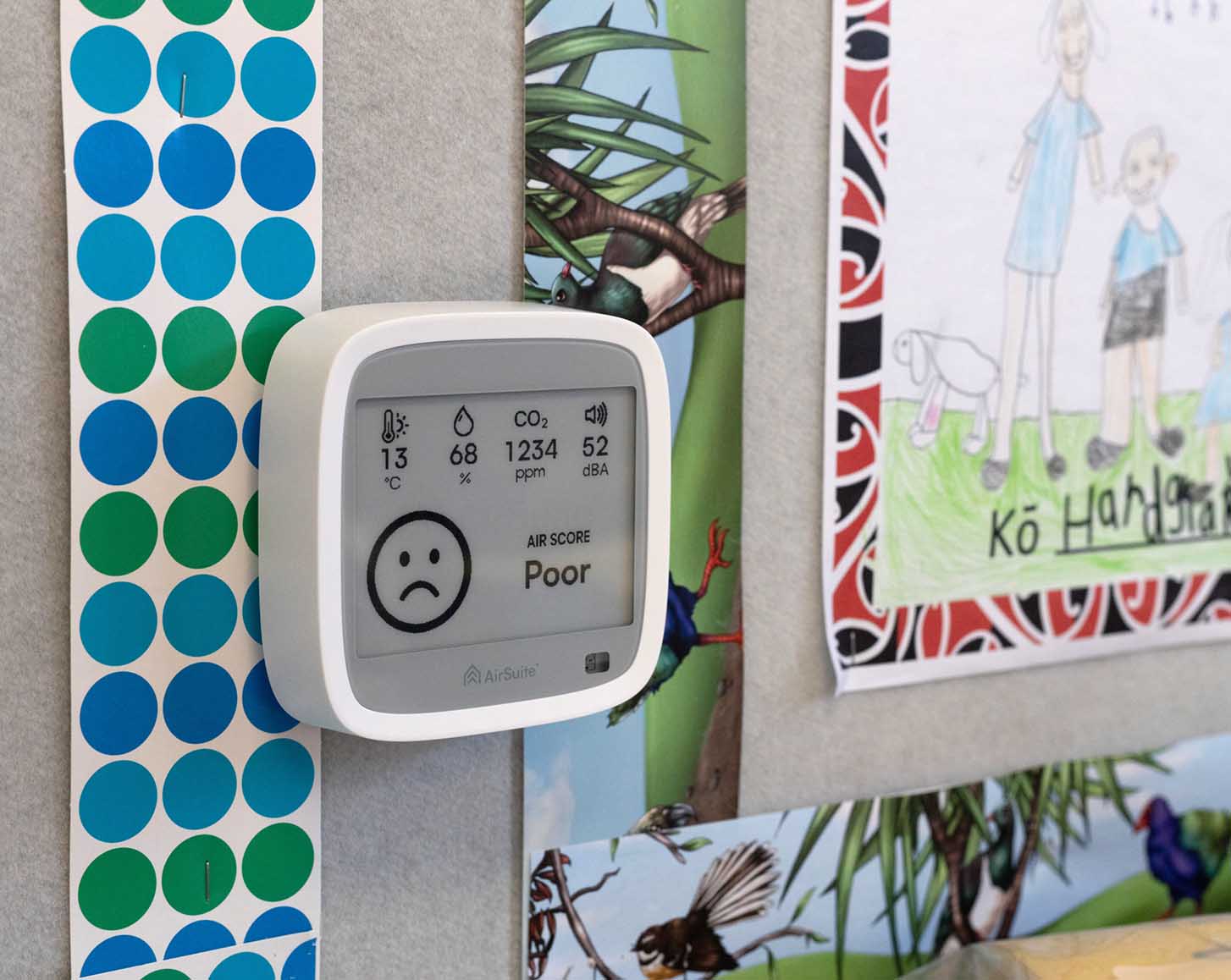
Providing hope to their families, K’aute Pasifika partnered with AirSuite to install 150 battery-powered indoor air quality monitors to enable environmental monitoring to be set up across 75 households in the Waikato region.
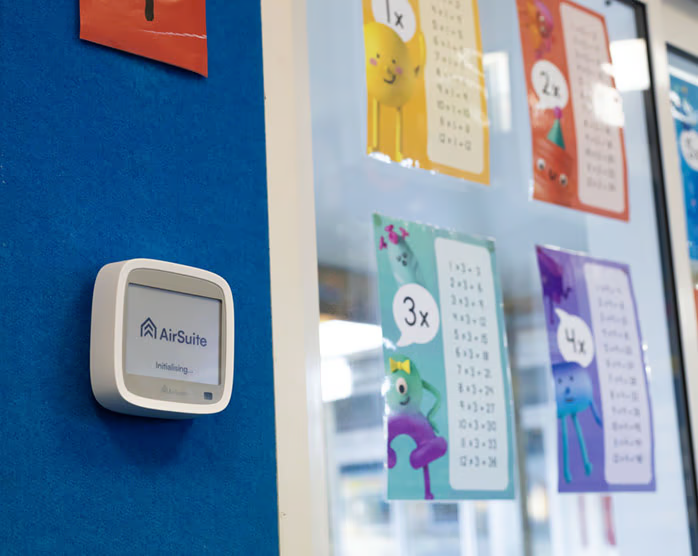
AirSuite monitors use cellular IoT technology (LTE) to connect to the Spark mobile IoT network, so can be deployed anywhere, even without Wi-Fi. Each device is already set up with everything the household needs. Each family were given two AirSuite monitors — one to be placed in the master bedroom and another in the lounge.
Three simple steps to gain real-time data that matters
AirSuite made the process for K’aute Pasifika as simple and as streamlined as possible. The following three steps can be done in a matter of minutes and don’t require any technical expertise:
- K’aute Pasifika goes into their home and explains what it is they’re installing and takes some details from the family.
- K’aute Pasifika opens AirSuite’s mobile app, enters a password and where the monitor is being deployed (the bedroom or lounge).
- The monitor is turned on and immediately reports data to the Cloud.
Insights determine if it’s a change in behaviour that’s needed, or landlord investment
Foa, the Affordable Energy for All Navigator at K’aute Pasifika, describes how data from the environmental monitoring helps them:
The data helps us to identify whether the issue is behavioural or structural. And whether I have to educate the families on how they can make changes to their living environment, or whether it’s a case of advocacy and landlords committing to property maintenance.
Foa Samuelu, Affordable Energy for All Navigator, K’aute Pasifika
If it’s determined the issues are structural, the information from the AirSuite monitors allows Foa to have fact-based conversations with landlords. These facts inform K’aute Pasifika’s advocacy, as they can explain why the landlord needs to install a heat pump, double glaze the property, insulate, or perform other types of maintenance to rectify the issue.
K’aute Pasifika can also inform the landlord how the home is performing against other properties in the area — giving landlords an added incentive to act quickly.
Thanks to the AirSuite app which receives real-time information from the household’s sensors, each family also gets notified when their indoor air quality falls outside recommended levels. This prompts them to act — such as open a window, close curtains, or adjust the heating. Foa says these insights encourage families to create healthy habits around ventilation and heating which they can sustain long after the sensors are no longer in their homes.
Evidence-based discoveries around moisture and heat loss mean investing in the right areas for maximum impact
Here’s one example of what K’aute Pasifika did with data collected from AirSuite sensors. They discovered moisture and inefficient heating was a major issue for many homes. As a result of these insights, they distributed 150 dehumidifiers along with bubble wrap — an affordable and effective way of insulating windows and controlling moisture levels. These measures help to create a healthier, warmer, drier home — and lower power bills during winter — to minimise energy hardship.
Without data from AirSuite sensors, K’aute Pasifika would have been unable to reliably measure the level of humidity and temperature in each home and identify patterns and trends across the families.
The knowledge, information and tools needed for warmer, drier, healthier homes
K’aute Pasifika CEO Leaupepe Rachel Karalus says:
AirSuite provided the knowledge, information, and tools to enable us to gather critical data to help our families understand how small adjustments to the way we live can improve health outcomes. The data collected has enabled us to provide individual and tailored support to increase equitable health outcomes for our families.
AirSuite work closely with our team to identify and understand the data which enables us to support clients to make behavioural changes. We’re grateful to work alongside AirSuite who share similar values on providing solutions to improve the wellbeing of our communities.
Leaupepe Rachel Karalus, Chief Executive, K’aute Pasifika