
Key benefits
Prioritise investment where it counts
Every property team has a longer list of buildings needing work than it has budget to fix them. The hard part is not knowing that something should be done — it is defending the order you do it in.
The AirSuite Monitor Portal gives administrators the oversight required to manage indoor environment quality across an entire building network, and the evidence to direct spending where it will do the most good.

The problem
Remedial budgets are usually allocated on the loudest complaint
Without measurement, prioritisation falls back on whatever evidence is available: a report from a site visit, an anecdote from a tenant, or the assumption that the oldest building must be the worst. None of these are reliable, and all of them are hard to defend when the money runs out.
Spot testing does not solve it either. A consultant with a handheld meter tells you what one room was like on one afternoon, which says very little about how that space performs across a year, a season, or a full working week.
It is not cheap either. Before it deployed monitors, Te Pūkenga was paying up to $13,000–$14,000 for a fortnight of consultant sampling at a single campus; a fleet of 36 portable monitors covering all sixteen campuses cost about $30,000 once.
Going to look in person has the same weakness and a larger bill. Assessing a portfolio building by building means sending staff to every site, paying for their time and their travel, and still coming back with a description of the day they happened to visit.
The result is capital spent on the sites that ask most persistently rather than the sites that need it most, and no way to demonstrate afterwards whether the spending accomplished anything.
Built for portfolios
Oversight across every building you are responsible for
- Tens of thousands
- Air quality monitors already supported in the Monitor Portal for existing customers
- Automatic
- Grouping of monitors into properties by location, so multi-site portfolios stay manageable
- Long-term
- Historical records, so decisions rest on how a space behaves over seasons rather than on a single visit
How AirSuite helps
Build the evidence base for remedial investment
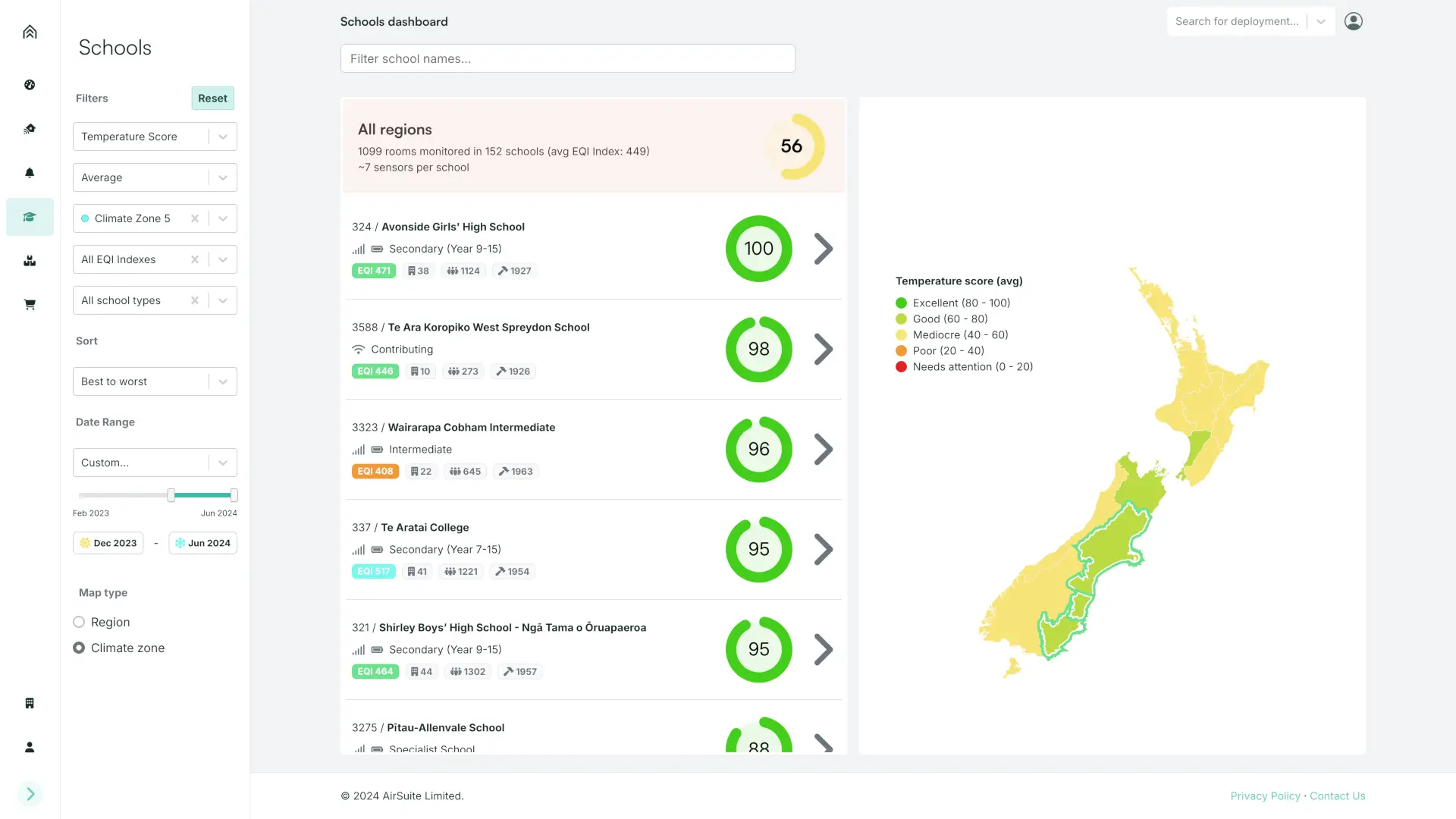
One view of every site
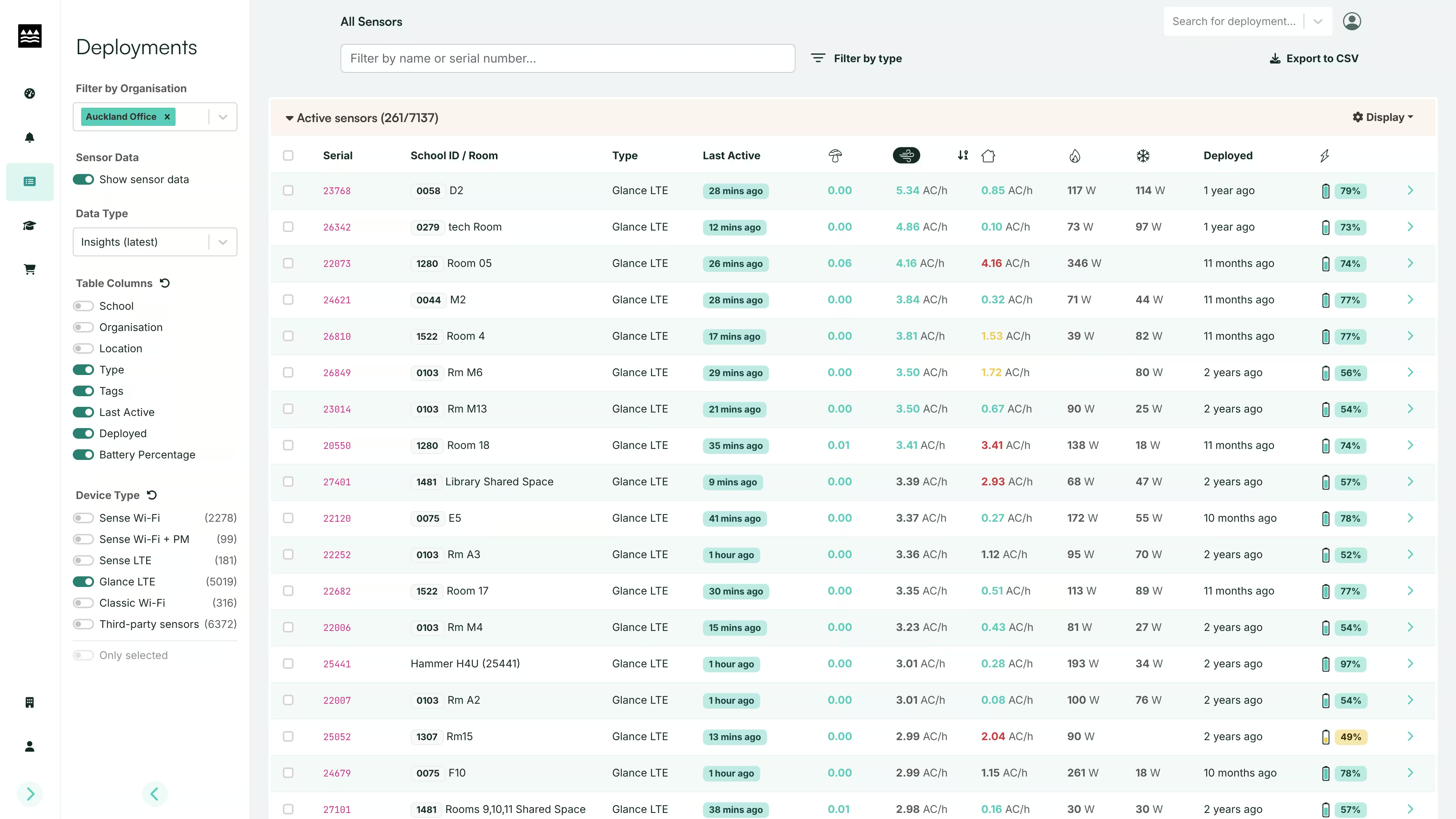
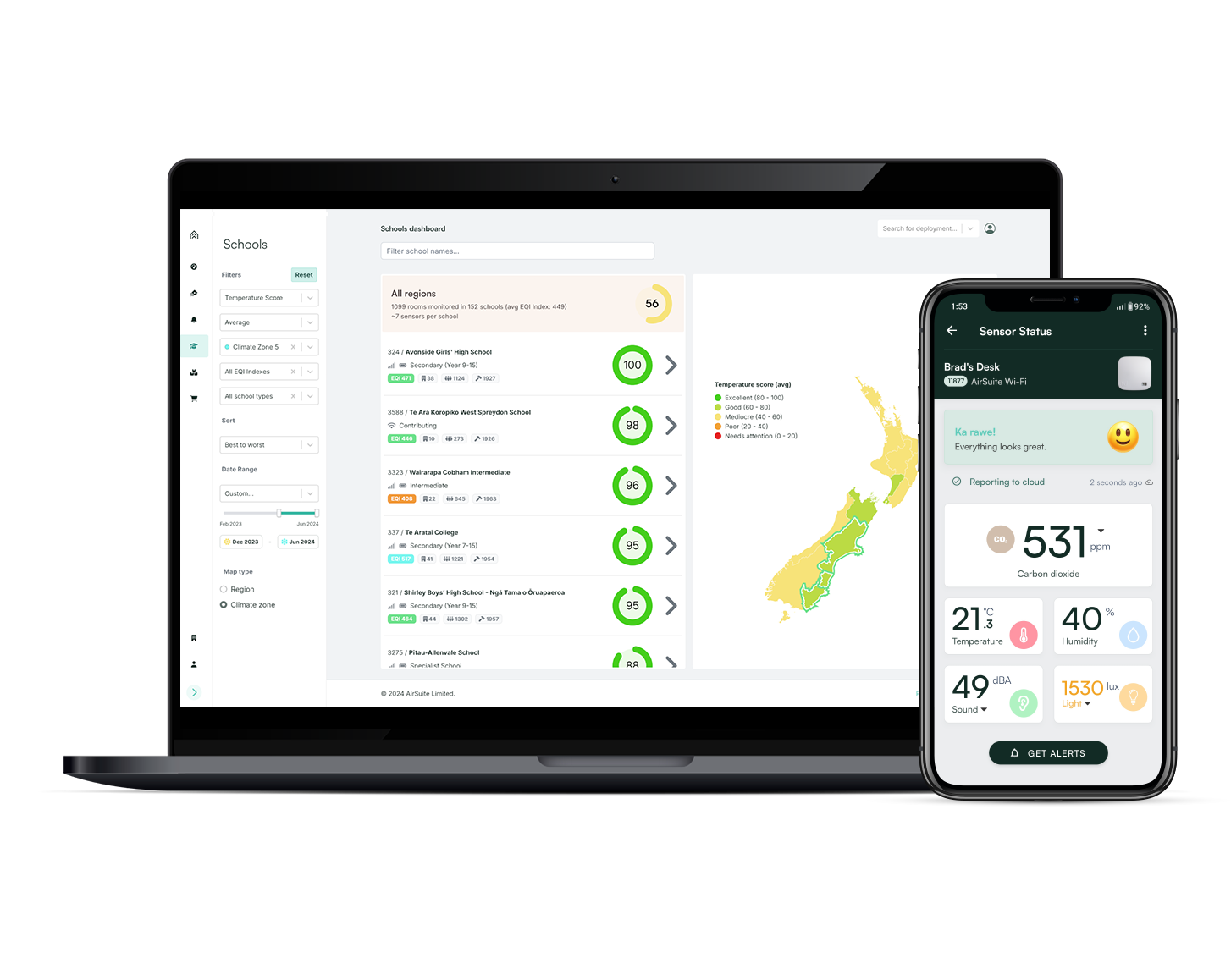
Get quick access to live data from all connected monitors in one place. Devices group into properties automatically by location, so a portfolio of one site or a hundred is managed the same way.
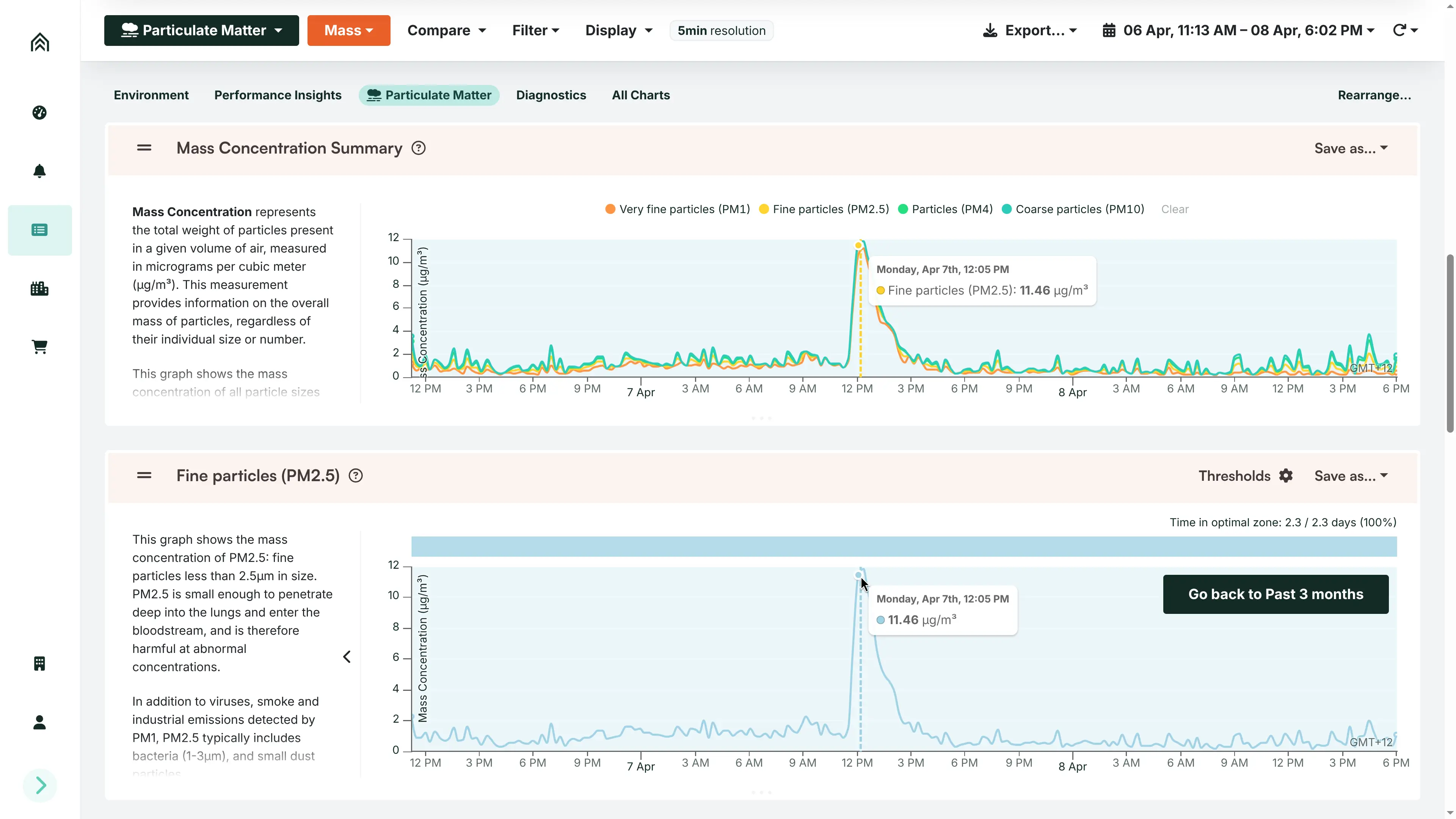
Analyse long-term trends
Use historical data to identify risks to health and safety, productivity, sustainability and resource efficiency — and to separate a genuine building problem from an unusually hot week.
Rank what to fix first
Identify the areas and times where conditions are affecting productivity, find the spaces where air quality may be contributing to illness and absence, and direct investment where it will have the greatest impact.
Beyond the portal
Get the data to the people who need it
Alerts and reporting
Configure thresholds and alerts so problems surface without anyone watching a screen, and use scheduled reporting to keep stakeholders informed between reviews.
Integration and analysis
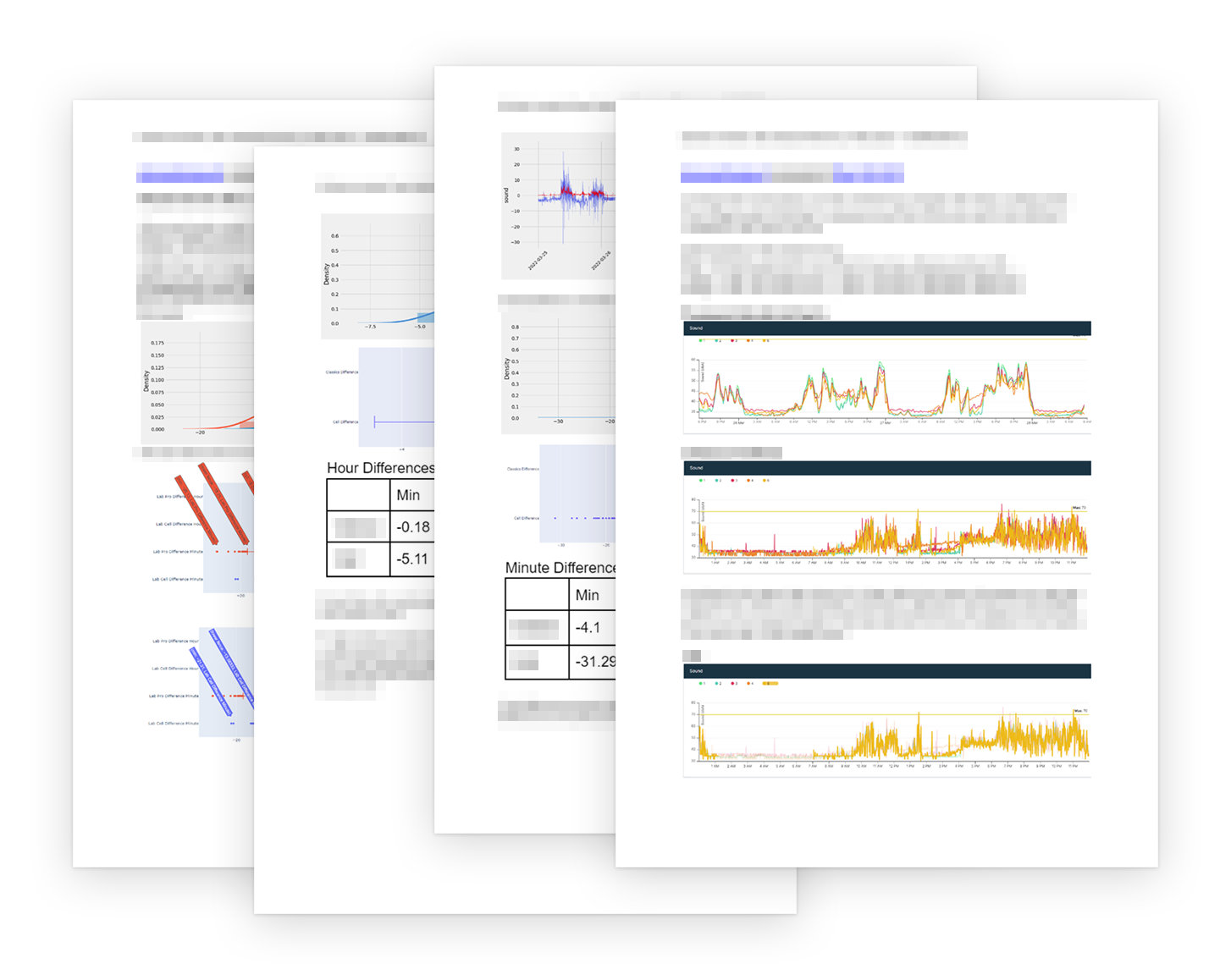
Export data for reporting, or integrate it with a building management system through our API. Where you need the analysis done for you, the AirSuite Consulting team can take it from raw data to a recommendation.
In practice
How the Ministry of Education finds the classrooms that need investment
Te Haratau, the New Zealand Ministry of Education’s indoor environment programme, is the largest indoor air quality monitoring project in the country, covering more than 8,000 classrooms. Seeing where investment was most needed was a key driver for deploying monitors in schools nationwide.
The alternative was to send staff out to assess each school in person — across every region of the country, at a cost in salaries and travel that grew with each site visited, and with each assessment only ever describing the day it was carried out.
Monitoring gives the Ministry a year-round picture of how every classroom actually performs instead, comparable across regions, climate zones, building ages and roll sizes. It has also shown where a rebuild was not the answer — some older buildings needed only a glazing upgrade, a finding worth millions of dollars.
Utilisation has proved to matter as much as air quality. How many hours a room has actually been occupied tells the Ministry whether its fittings are as worn as the refurbishment schedule assumes — whether that carpet really does need replacing yet. Where a room has been used less than predicted, refurbishment has been deferred by several years; where it has been used more, there is a case for bringing the funding forward.
Questions
Prioritising building investment
How many monitors does a building need?
Enough to answer the question you are asking. Ranking buildings against each other needs less coverage than diagnosing a specific floor or supporting a certification submission. Our consulting team can help you scope this before you buy anything.
Can we start small and expand?
Yes, and most customers do. Monitors are added to the Monitor Portal as you deploy them and group themselves into properties automatically, so a pilot on one site extends to a portfolio without rework.
Who in an organisation uses the Monitor Portal?
Typically asset and facilities managers, alongside sustainability and property teams. User and organisation management is built in, so access can be granted to individual sites or to the whole portfolio as appropriate.
What happens to the data over time?
It is retained so you can analyse long-term trends. That history is what allows a comparison between this winter and last, or between a space before and after remedial work.
Do you help interpret the results?
The Monitor Portal is designed to be read without a specialist, and includes recommendations. Where you want deeper analysis, AirSuite Consulting works with your team to turn the data into a prioritised programme of work.
Can we prove the investment worked?
That is the strongest argument for continuous monitoring over one-off testing. The monitors stay in place, so the same measurements that justified the work also demonstrate the improvement afterwards.
Ready when you are
Let’s talk about how AirSuite™ can deliver real indoor outcomes for your organisation today