
Key benefits
Improve health and productivity
People spend the overwhelming majority of their lives indoors, and the quality of the air in those spaces shapes how they feel, how well they concentrate and how often they get sick.
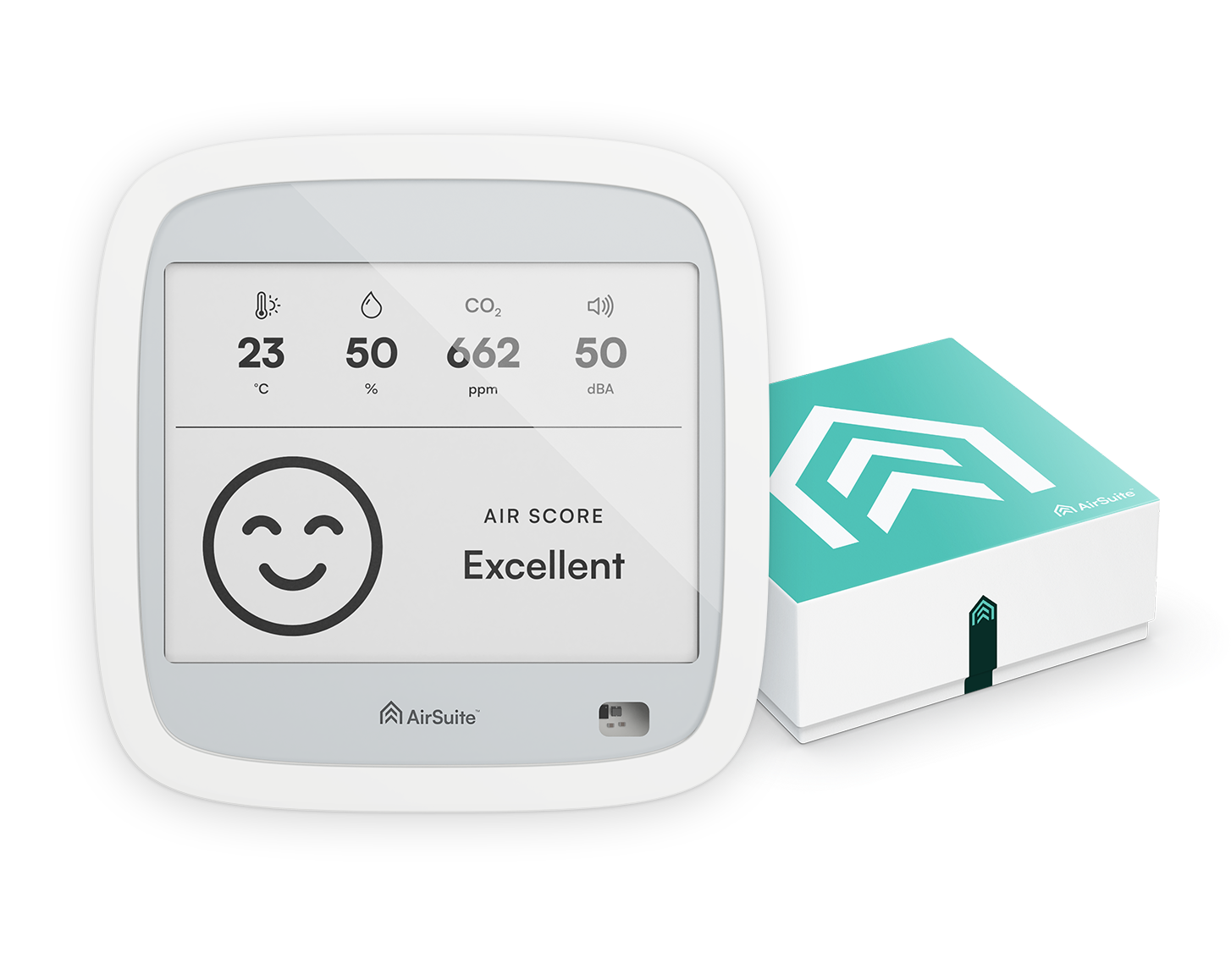
AirSuite measures the conditions inside your buildings continuously, so the link between an underperforming space and the people using it stops being a matter of opinion.
The problem
Poor indoor air quality is invisible until it isn't
Carbon dioxide builds up in any occupied room faster than most people expect. A meeting room that felt fine at 9am can be well past the point of comfortable concentration by mid morning, and nobody in it will be able to tell you why the discussion started going in circles.
The symptoms of a poor indoor environment — headaches, drowsiness, irritated eyes and throats, an afternoon slump — are non-specific enough to be blamed on almost anything else. They are rarely attributed to the building, so the building never gets fixed.
Volatile organic compounds from furnishings and cleaning products, fine particulates drawn in from outside, humidity that encourages mould, and background noise that makes focused work impossible all behave the same way: they degrade the people in a space long before anyone files a complaint.
The evidence
What better indoor environments are worth
- 35%
- Lower short-term sick leave in offices supplied with more outdoor air, in the study the World Green Building Council draws on1
- 8-11%
- Productivity improvement that a body of research suggests is “not uncommon as a result of better air quality”1
- 11-23%
- Worse performance on decision-making tasks at 1,000 ppm CO₂ than at 600 ppm — despite 1,000 ppm being widely considered acceptable2
How AirSuite helps
Turn how a room feels into something you can act on

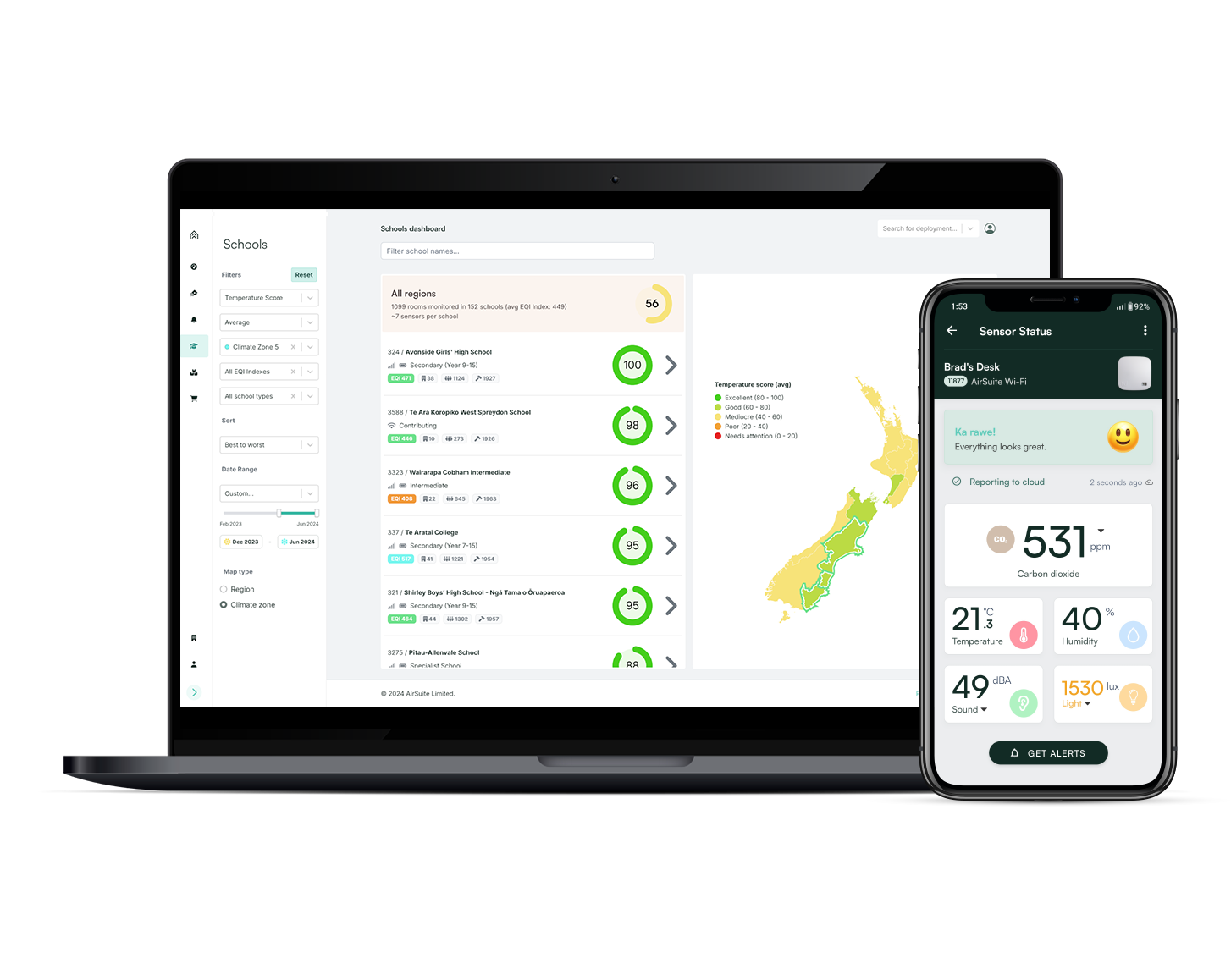
See CO₂ as it climbs
Controlling indoor CO₂ is proven to improve concentration and decision-making. AirSuite shows you the hours and the rooms where levels are running high, so ventilation can be adjusted around real occupancy rather than a fixed schedule.

Find the causes of sick days
High quality indoor environments are proven to lower the incidence of respiratory illness, headaches and fatigue. Monitoring volatile organic compounds and particulates tells you which spaces are contributing to absence, and when.

Make the case with evidence
Continuous data turns “this room is stuffy” into a record you can put in front of a facilities team or a board. Export it for a certification submission, or use it to justify remedial work on the spaces that need it most.
Workforce Insights
What are global workforces saying about air quality?



What gets measured
The conditions that shape how people feel at work
Air quality
Carbon dioxide, volatile organic compounds and — with optional add-ons — particulates, carbon monoxide and formaldehyde. Together these describe how fresh the air in a space really is.
Comfort and distraction
Temperature, humidity, acoustics and lighting. These are the conditions people complain about first, and the ones most likely to drive someone out of a space — or out of a job.
In practice
Settling “too hot” against “too cold”
Cushman & Wakefield, one of New Zealand’s leading property management consultancies, was asked by a financial services client to answer the question every workplace argues about: whose sense of comfort is the right one? Monitors went into the sites with known complaints first, and are now used before the complaints arrive.
Measurement changes what the conversation is about. Where a room is within range, the answer is a jumper rather than a callout. Where it is not, there is evidence for the subcontractor who has to fix it — and for the landlord whose lease obliges them to hold a temperature in the first place. Problems get raised before staff arrive, and the facilities team stops being sent out on hunches.
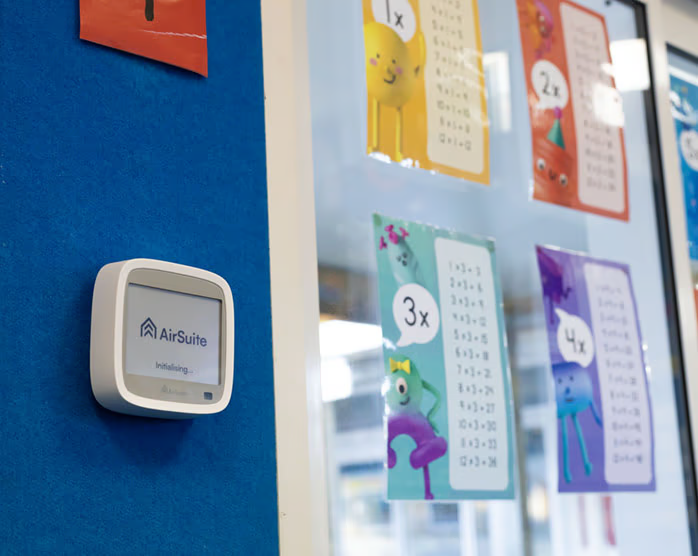
The same shift shows up wherever conditions are contested. At Te Pūkenga, health and safety staff put portable monitors into classrooms, engineering workshops, salons and veterinary theatres — spaces held to WorkSafe exposure standards rather than comfort guidance — and describe the result as moving from opinion-based to evidence-based health and safety. A complaint used to depend on who was asked; now it depends on what was measured.
Questions
Indoor air quality and productivity
What CO₂ level is too high for an office?
Outdoor air sits at roughly 400 ppm. Indoor levels climb with occupancy, and concentration and decision-making measurably decline as they rise. Rather than a single pass or fail threshold, AirSuite shows you how long each space spends at elevated levels, which is what tells you whether ventilation is keeping up with how the room is actually used.
Do we need to monitor every room, or is a sample enough?
It depends on what you are trying to prove. A representative sample is often enough to establish whether a building has a problem. Certification schemes and remedial business cases usually need coverage of the specific spaces in question. Our consulting team can help you decide where monitors will earn their place.
How quickly will we see anything useful?
Monitors begin reporting as soon as they are installed, and installation is tool-free and takes under a minute. Daily patterns are usually obvious within the first week; seasonal patterns need a longer record, which is why continuous monitoring beats one-off testing.
Can this support a NABERS or WELL certification submission?
Yes. AirSuite automates the data collection required for NABERS Indoor Environment assessments and measures the parameters required by WELL A01 Air Quality, and the Monitor Portal exports the data in the format each scheme expects.
Who typically acts on this data?
Facilities and property teams use it to tune HVAC and prioritise maintenance. People and HR teams use it to respond to comfort complaints with evidence. Executives use it to understand a portfolio well enough to direct investment at the worst-performing spaces first.
Does the hardware need cabling or IT involvement?
Not usually. AirSuite monitors connect over 4G/LTE-M or Wi-Fi and can run on a multi-year battery, so a deployment does not depend on getting network access or power to every room you want to measure.
Ready when you are
Let’s talk about how AirSuite™ can deliver real indoor outcomes for your organisation today