

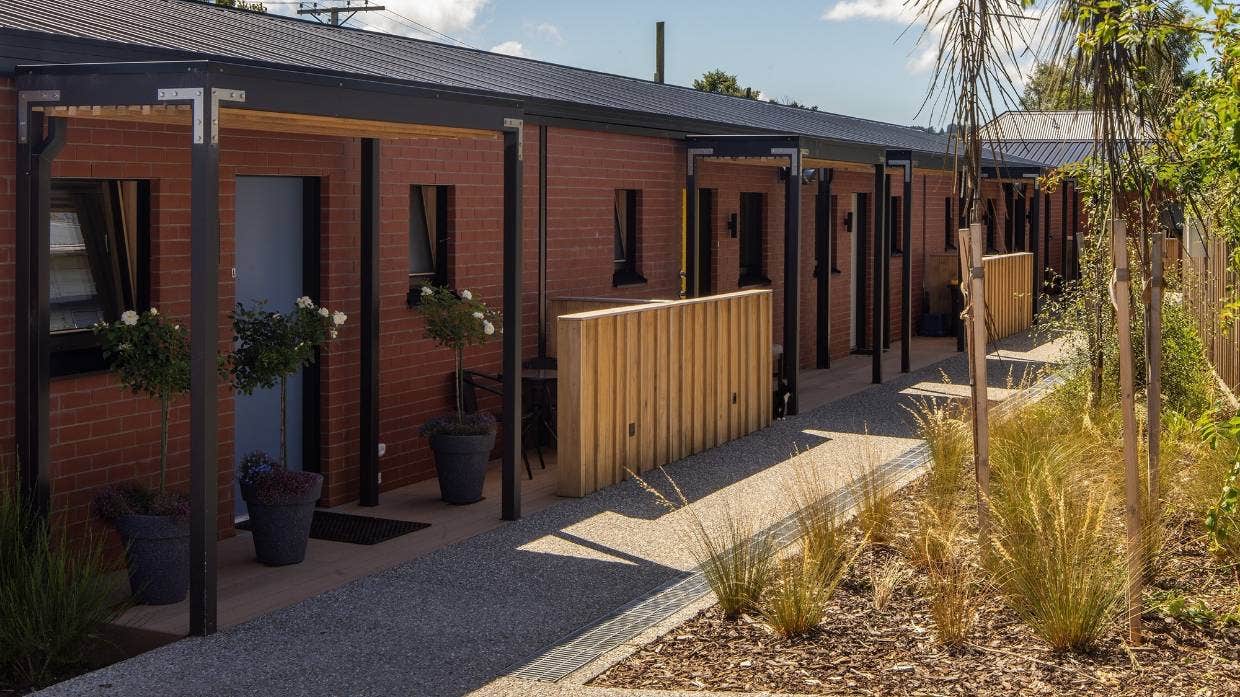
Dunedin City Council (DCC) currently owns 941 community housing units in Dunedin — ten of which are passive units on School Street, Kaikorai. Most of these passive units are tenanted by retirees and are built with comfort, energy efficiency and accessibility in mind. They were built with a top Homestar rating which means they retain heat, only require one small panel heater — which is left running on low power — and minimal ventilation.
Introducing the project: support and inform investment decisions with accurate real-time data
Passive homes significantly reduce energy consumption — making them good for the planet and budget. However, it’s no secret constructing passive homes comes at a premium — Consumer states a nine or ten rating adds an extra quarter to the final build cost. Even though the social, environmental, and economic benefits are striking, it’s understandable that any local government’s decision to invest time and capital must be driven by accurate, real-time, location-specific data.
And that’s where AirSuite comes in.
The solution: deploying AirSuite sensors
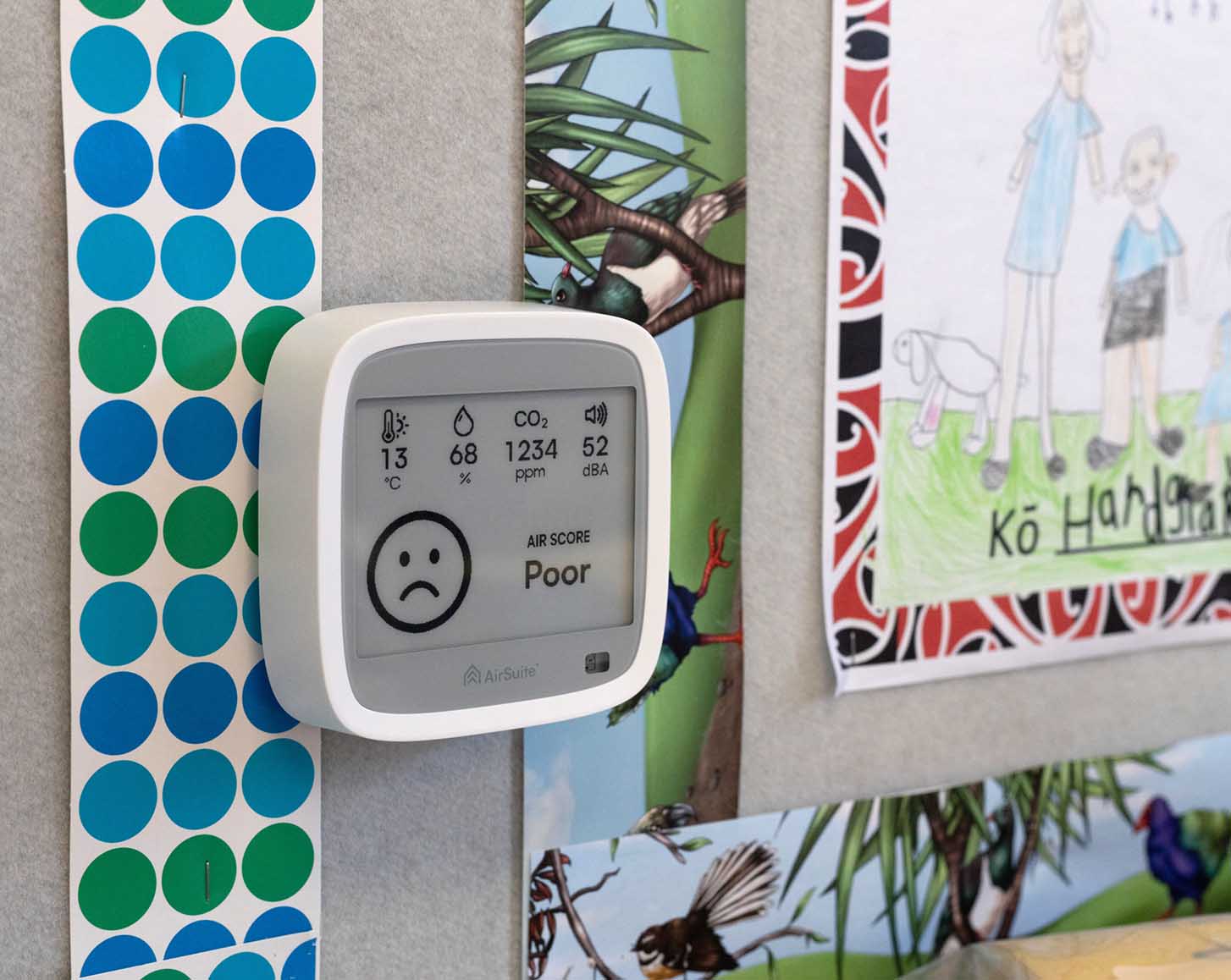
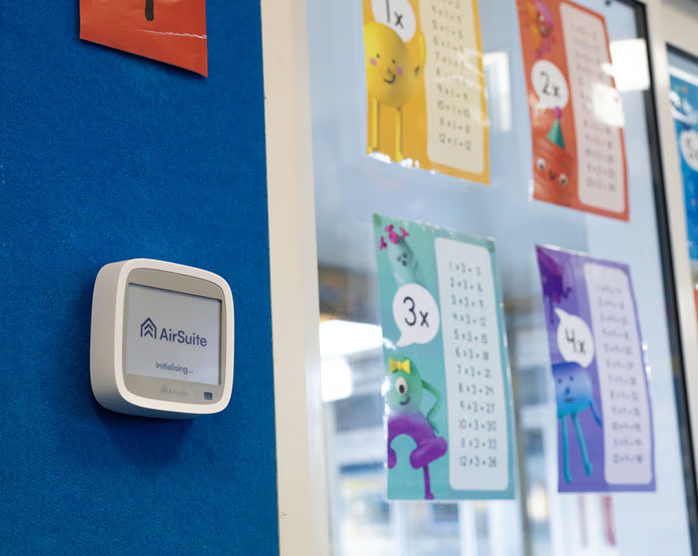
For this project, DCC deployed eleven AirSuite monitors. Ten were installed inside (one in each unit); one was fixed outside. The data the sensors capture is used to measure and monitor the energy performance and thermal wellbeing — temperature and humidity levels — of each unit. If the homes behave as expected, temperature, energy use, humidity and CO₂ levels should be stable, regardless of weather and seasons. While the outdoor sensor may capture wild fluctuations and sudden drops in temperatures, the indoor air quality should stay consistently healthy and comfortable.
The purpose of this project: data-led decision making
AirSuite spoke to Cem Akcaoglu, Energy and Sustainability Manager for Assets and Facilities in the DCC Property Services team to hear more about this project. He says the purpose of the monitors is to gain data on indoor air quality from houses to support an investment decision:
[Of the houses] in our portfolio, some are built to passive housing standards — around nine to ten Green Star — and some are standard houses. By measuring the energy performance of different houses, we can see how much it costs to bring our community housing units to the maximum standard.
Cem Akcaoglu, Energy and Sustainability Manager, Assets and Facilities, Dunedin City Council Property Services
It’s also a way for DCC to demonstrate their position as a socially responsible landlord by understanding the benefits for tenants. The sensors’ accumulated data can paint a picture which helps answer questions like: “Does living in a passive home lift the tenants’ wellbeing and quality of life as a direct result of council investment?” and “Due to the savings in energy bills how quickly do passive homes pay for themselves?”
The results
The sensors provide a point-in-time measurement. Plus, via the cloud-based AirSuite Monitor Portal, Cem and his team access an easy-to-digest visual representation of the units’ performance over time.
The situation is dynamic — this is the first year DCC will track the School Street passive homes’ performance during winter, and whether they maintain their thermal integrity, to validate DCC’s capital expense.
The data enables us to understand the performance of a particular house and energy level so we can monitor the net gain, which would be the reduction in electricity or heating costs for the tenants. That’s the ultimate goal.
Cem Akcaoglu, Dunedin City Council
It’s not just the data that’s invaluable to Cem and his team. It’s also the way the sensors automatically update with new features meaning zero fuss or downtime.
The sensors calibrate and update themselves. That’s an amazing feature and removes the requirement of sending them back to AirSuite.
Cem Akcaoglu, Dunedin City Council
AirSuite asked Cem about some of the other benefits of partnering with them. He replied:
We have a really good working relationship with AirSuite. They have a very quick response time. We like the AirSuite Portal and the product range — it makes life easier — you can choose a particular sensor for each project.
Cem Akcaoglu, Dunedin City Council
Passive housing, accurate data, and a strong working relationship creates wins all round
Access to real-time data, world-class consultants who help DCC interpret the results, and self-calibrating technology is a win all round. DCC can validate its hypothesis and direct resources to projects that work. Tenants sleep easy knowing they have significantly reduced energy bills and consistently good air quality no matter the weather. The planet benefits too, with reduced emissions and less energy expenditure on heating, electricity and ventilation.
AirSuite has the capability to deliver similar outcomes for other domestic and international councils — for community housing units, public facilities, or commercial properties. The easy-to-install devices empower the end user to validate their investment decisions and take informed, data-led steps — improving air quality of homes, recreational facilities, and commercial buildings worldwide.