


Many corporates face the dilemma of how to keep their people happy at work, when everyone experiences temperature differently.
How AirSuite helped a real-estate service provider to define “comfort” for their client
Some of us are more sensitive to cold, others hate being hot. How do leaders get to the root of the issue, keep their people happy and comfortable, and intervene decisively, but only when necessary?
Cushman & Wakefield — one of New Zealand’s leading property management consultancies — were engaged by their client, a financial institution, to answer this very question, and they turned to AirSuite for guidance.
To start with, they deployed AirSuite sensors to sites with known indoor air quality issues. Now, they use them proactively — intervening before things get heated.
We asked them to outline the benefits they noticed since they deployed AirSuite Sense LTE across their sites.
Keep conversations factual by having data on hand
A spokesperson for the client says it can be tricky when team members can come from polar opposite climates — some employees grew up in tropical climes, while others hail from chilly countries:
One’s going to be saying it’s too hot. The other, too cold… but when you’ve got the data, you can prove the temperature is within safe boundaries.
Facts enable constructive conversations, minimise unnecessary callouts, and reduce the risk of making expensive changes to the environment which don’t address the root cause. With real-time data, managers can feel confident on the appropriate course of action.
For example, if the temperature is recorded at safe levels, managers can encourage the staff member concerned to make simple adjustments to their behaviour — such as adding or removing clothing layers — to feel more comfortable at work.
Monitor the indoor environment to let staff know “we take it seriously”
Real-time data from their AirSuite monitors has allowed them to address problems early, even before staff or customers arrive. They told us:
As soon as the property management team are alerted of an issue, they can reach out to their subcontractor network to resolve it. Then they can immediately reassure staff on-site that they are taking care of the issue.
Being able to solve problems before on-site staff are even aware of them demonstrates care to their staff and customers, while also building a culture of trust between the central management team and staff working in different locations. What’s more, it means those staff are not burdened with, or distracted by, maintenance duties.
Rule out lengthy arguments by defining where responsibility lies
Having real-time data means they can investigate the cause of any issues and remove uncertainty of whose responsibility it is to fix.
It helps when you’re having conversations with landlords. According to their lease conditions, they’ve got to maintain the environment at a certain temperature. When it falls outside of those temperatures, you’ve got evidence.
Data collected from AirSuite monitors has led to targeted improvements in the design of some of their premises — particularly those in areas susceptible to frost and cold winds.
And it’s made those potentially gnarly conversations with landlords about their responsibilities, and concerning patterns in indoor air conditions, much easier.
AirSuite sensors can blend into the background
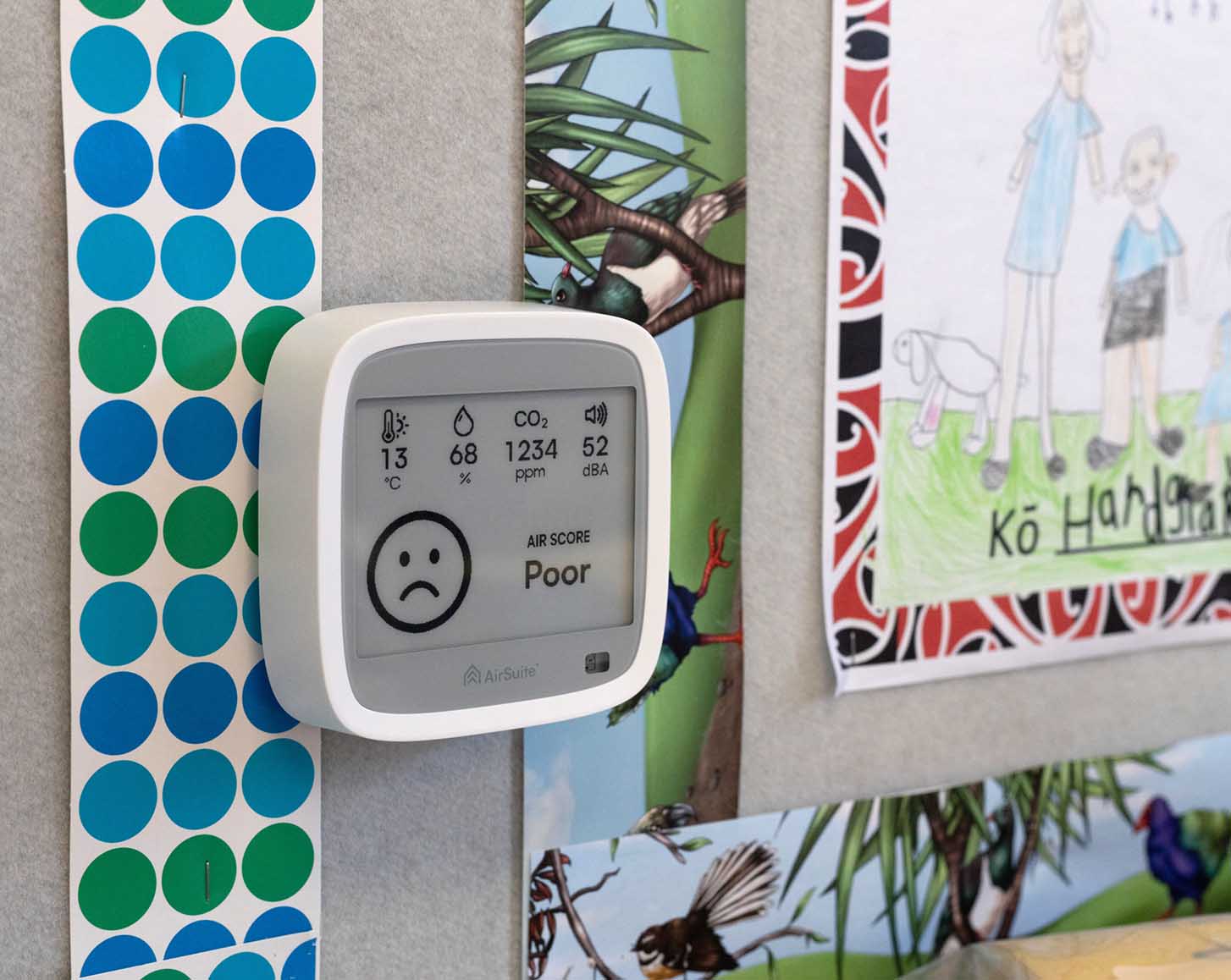
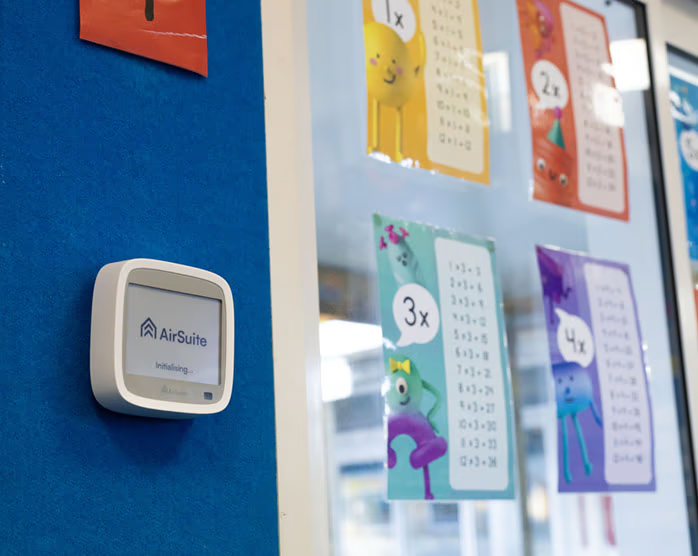
Feedback on the simple external design of AirSuite Sense has been positive. As data is not displayed on the device itself, it’s easy to walk past it.
Staff are not fixated on the temperature or other outputs, so they don’t spend time trying to tweak their environment to achieve a perfect number on the display.
Plus, AirSuite monitors are fairly tamper-resistant by design. This means, once in-situ, staff are not tempted to move them around.
Portability lets you move devices to other sites and compare findings
The client now use their AirSuite sensors in targeted areas to identify if an issue is an anomaly or a systemic challenge which requires more widespread investment.
And it’s easy for them to move the sensors to other sites thanks to their portability, the automatic CO₂ calibration feature and ease of updating locations on the AirSuite Portal.
Five ways facts take the heat out of conversations
The client told us that the temperature and indoor air quality insights they gathered empowers them to:
- have robust conversations on the source of the issue
- de-escalate conflict and minimise favouritism
- reduce the strain on their facilities team and minimise callouts
- demonstrate they care by monitoring conditions and logging maintenance jobs early
- test a hypothesis and build a strong business case for addressing systemic or structural needs.